High-Quality Domestic Fruits Thrive on Dual Fronts: Special Varieties Gain Popularity Overseas, Kiwifruits Face Price Surge Due to Reduced Production
Kiwifruit Prices Rise Amid Reduced Production in Major Producing Areas
Since the launch of domestic kiwifruits in 2025, prices have shown an overall upward trend, with premium fruits enjoying particularly significant premiums and notable increases compared to the same period last year. The core cause of this phenomenon is the sharp drop in output in major producing areas affected by natural disasters. At the national level, the total output of kiwifruits reached 3.5 million tons in 2024, but is expected to decrease to 3.05 million tons in 2025, a year-on-year decline of 12.9%. Among them, premium varieties such as red-fleshed and yellow-fleshed kiwifruits have experienced more prominent production reductions.
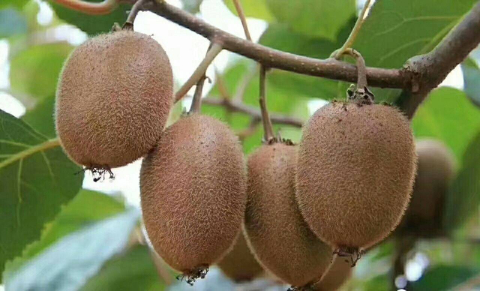
Shaanxi, the largest producing area in the country, produced 1.57 million tons in 2024, accounting for one-third of the national total. However, in 2025, it suffered the triple blow of late spring cold, drought, and high temperatures. The combined disasters of prolonged high temperatures, drought, and strong winds during the critical pollination and fruit-setting period led to the withering and shedding of flower buds and massive fruit drop. The overall output is expected to decline by 40%, with some core regions such as Meixian County seeing a reduction of over 50%.
Sichuan's core producing areas are also under supply contraction pressure: the output of red-fleshed kiwifruits in Pujiang has dropped by more than 20%, and some orchards in Guangyuan have experienced significant production reductions, resulting in a slight decrease in the province's total output. Early and mid-ripening varieties have basically been sold out, and the proportion of premium fruits remaining in cold storage continues to decline. Producing areas that had sufficient supply in previous years, such as Xiangxi in Hunan, have also witnessed a sharp drop in supply index and a slowdown in shipment pace.
In terms of prices, the purchase prices at producing areas have risen significantly. The producing area price of Cuixiang kiwifruits in Zhouzhi, Shaanxi is 5.21 yuan per jin, a year-on-year increase of 4.2%-24%; the purchase price of Xuxiang kiwifruits is 3-3.8 yuan per jin, up 20%-30% year-on-year. The cumulative increase in red-fleshed kiwifruits in Pujiang, Sichuan is 11.3%, the retail price from growers in Dujiangyan, Chengdu reaches 8-10 yuan per jin, and the field purchase price of general-grade kiwifruits in Pengzhou has soared by 50%. Wholesale prices in sales areas have also strengthened simultaneously: the average wholesale price of general-grade red-fleshed kiwifruits at Chongqing Shuangfu Agricultural Products Wholesale Market is 7.5-8.0 yuan per jin, a year-on-year increase of 10.3%-11.1%; the average wholesale price of Sichuan red-fleshed kiwifruits in sales areas is 6.10-6.15 yuan per jin, with a year-on-year growth of 5.2%-11.8%.
In the short term, the demand for stockpiling for "Double 12" and New Year's Day will support high prices, and the prices of high-quality varieties are expected to edge up slightly. However, currently, the inventory of mid-to-high-end fruits in cold storage in Shaanxi and Sichuan is sufficient, and the supply side has strong regulatory capacity. Concentrated outbound shipments after New Year's Day may trigger price corrections. The China Fruit Circulation Association predicts that if there is no extreme weather before the Spring Festival, prices may fall back to the range of 5-5.5 yuan per jin, but will still be higher than the level of 4.8-5.2 yuan per jin in the same period last year.
| Price Type |
Producing Area/Market |
Variety/Specification |
2025 Price |
2024 Same Period Price |
Growth Range |
| Producing Area Purchase Price |
Zhouzhi, Shaanxi |
Cuixiang Kiwifruit |
5.21 yuan/jin |
4.2-5 yuan/jin |
4.2%-24% |
| Producing Area Purchase Price |
Shaanxi |
Xuxiang Kiwifruit |
3-3.8 yuan/jin |
2.5-3.3 yuan/jin |
20%-30% |
| Producing Area Purchase Price |
Pujiang, Sichuan |
Red-fleshed Kiwifruit |
5.52 yuan/jin |
4.96 yuan/jin |
11.30% |
| Producing Area Retail Price |
Dujiangyan, Sichuan |
Kiwifruit |
8-10 yuan/jin |
- |
- |
| Field Purchase Price |
Pengzhou, Sichuan |
General-grade Kiwifruit |
6 yuan/jin |
4 yuan/jin |
50% |
| Sales Area Wholesale Price |
Chongqing Shuangfu Agricultural Products Wholesale Market |
Red-fleshed Kiwifruit |
7.5-8.0 yuan/jin |
6.8-7.2 yuan/jin |
10.3%-11.1% |
| Sales Area Wholesale Price |
Chongqing Shuangfu Agricultural Products Wholesale Market |
Yellow-fleshed Kiwifruit |
4.1 yuan/jin |
3.8 yuan/jin |
7.90% |
| Sales Area Wholesale Price |
Sales Area Market |
Sichuan Red-fleshed Kiwifruit |
6.10-6.15 yuan/jin |
5.5-5.8 yuan/jin |
5.2%-11.8% |
15.1 Tons of Dalian Sunshine Rose Grapes Exported to Saudi Arabia for the First Time
In December 2025, exciting foreign trade news came: a batch of 15.1 tons of Sunshine Rose grapes produced in Wafangdian, Dalian, was successfully shipped from Dayao Bay Port and finally arrived in Saudi Arabia. This marks the first time that grape products from this region have successfully entered the Saudi market, achieving a new breakthrough in the export of fresh grapes from Dalian to the Middle East and further expanding the global footprint of high-end domestic grapes, adding another brilliant case to the "going global" of high-quality Chinese agricultural products.

Located at the 39°N golden planting belt, known as the "paradise for fruit growth," Wafangdian boasts abundant annual sunshine hours and an appropriate temperature difference between day and night, enabling grapes to fully accumulate sugar and flavor substances during the growth cycle. Coupled with the local high-quality sandy loam soil that is breathable and fertile, and clean and pollution-free irrigation water, the unique natural endowments lay a solid foundation for the quality of grapes. Meanwhile, the local standardized planting system, which has been refined over the years, runs through the entire process—from selecting virus-free seedlings to ensure pure varieties, to adopting water-fertilizer integration for precise nutrient regulation, to implementing green pest control technologies to reduce pesticide use, and even strictly following the "sugar content qualification test + manual grading and screening" standards during harvesting, ensuring that each bunch of exported grapes has consistent size, color, and taste.
Supported by both natural advantages and technological innovations, Wafangdian grapes feature rich fruit aroma, a sugar content of generally 18-22 Brix, crisp and seedless flesh, and good storage and transportation resistance. Even after long-distance sea transportation, they can maintain fresh and plump quality, making them highly competitive in domestic and international markets. The local grape planting varieties are diverse, including popular types such as Kyoho, Late Red, Muscat Hamburg, Sunshine Rose, and Summer Black. Among them, Sunshine Rose has become the core export variety due to its sweet flavor and crisp texture. Currently, the registered orchard area of Sunshine Rose alone in Liguan Town and Zhaotun Township of Wafangdian exceeds 7,000 mu. The large-scale and intensive planting model, combined with a sound cold chain storage system, has built a stable supply system, establishing Wafangdian as an important base for fresh grape exports in China.
In addition, the efficient supervision and services of Dalian Customs have provided strong support for exports. By establishing a "green channel" for agricultural product exports, simplifying customs clearance procedures, and accelerating inspection and quarantine speeds, the freshness and delivery timeliness of products are guaranteed. According to authoritative statistics from Dalian Customs, from January to November 2025, the Dalian region has supervised the export of 13,000 tons of grapes with a total value of 156 million yuan. Compared with the same period last year, the export volume and value have achieved a leapfrog growth of 5.97 times and 3.91 times respectively. This strong growth momentum fully demonstrates the market recognition and development potential of Dalian grapes, laying a solid foundation for the subsequent expansion into more high-end markets such as the Middle East and Europe.
Panzhihua Late-Ripening Mangoes Launched, Available Until January 2026
In December 2025, the concentrated launch of late-ripening mangoes from Panzhihua, Sichuan, began, with the sales period lasting until early January 2026. In the cold winter when most mango-producing areas in the country have ended their sales, Panzhihua's unique winter supply advantage not only fills the gap in the domestic fresh mango market but also becomes a core competitiveness for overseas exports. As an important national production base for late-ripening mangoes, Panzhihua relies on the natural endowments of the 26°N golden latitude belt, featuring a relatively high average altitude and annual sunshine hours of 2,600 hours. Abundant sunlight and significant temperature differences between day and night help fruits accumulate sufficient sugar. Coupled with the subtropical vertical climate, the growth period of mangoes is 1-2 months longer than that in low-altitude producing areas, and 2-4 months later than mainstream producing areas such as Hainan and Guangxi. This not only avoids the peak domestic centralized listing period but also wins international market favor with its scarce fresh quality in winter.
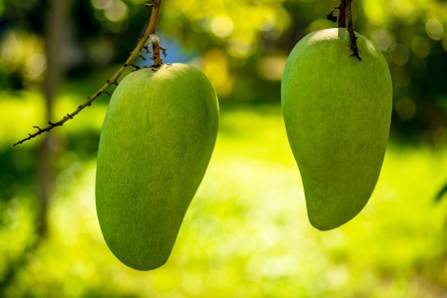
In terms of industrial scale and export foundation, Panzhihua has formed a mature supply system. Alone in Wuben Township, Renhe District, there is a 13,000-mu late-ripening mango planting base, mainly cultivating Keitt mangoes. The total output of this harvest is expected to reach 27,500 tons, with an average yield of about 20 tons per mu for ordinary orchards and 30 tons per mu for high-quality orchards. As a core export brand, "Renhe Zhenmang" has built 80,000 mu of registered export orchards covering 13 filed bases, forming an annual export capacity of 150,000 tons. The export varieties have expanded from Keitt mangoes to more than 20 categories including Jinhuang and Guifei mangoes, being exported to 12 countries and regions such as Russia, Malaysia, the United Arab Emirates, Singapore, and Canada. In 2025, the export volume is expected to reach 10,000 tons, with the export value exceeding 80 million yuan. The export price is 0.3-0.5 yuan per jin higher than the domestic market, effectively driving farmers' income growth.
Logistics and policy guarantees further support exports. Relying on the air logistics hubs of Chengdu Shuangliu and Tianfu International Airports, Panzhihua mangoes can reach Singapore in 28 hours and be placed on European supermarket shelves in 72 hours through the "air + high-speed rail" multimodal transport. The customs "green channel" reduces the customs clearance time to 2.5 hours, with the loss rate controlled within 0.8%. Currently, Panzhihua has established 22 customs-recorded export bases and 3 export packaging factories, strictly following the local standard "Modern Farm - Good Agricultural Practices for Mangoes" and building a full-process quality traceability system. The purchasing side remains active, with foreign buyers setting up procurement stations and some shipping dozens of tons per day. With strong international demand before the Spring Festival, coupled with the support of models such as Panzhihua Post's live streaming and whole-vehicle direct transportation, Panzhihua not only ensures domestic supply but also promotes the continuous expansion of "Panzhihua Mangoes" in markets along the "Belt and Road," becoming a benchmark for the export of domestic late-ripening fruits.

 Your message must be between 20-3,000 characters!